Your decision-making skills will be needed more than ever before in the cancer journey. From the moment I was diagnosed, my husband prayed over me and asked God for healing and wisdom as we navigated the journey. It’s important for you to be your own best advocate. To do that, here are five important decisions you must make in the cancer journey.
- Where should I be treated? This is a very important decision. For some people, the closest cancer center may be just what you need, but for some it may not be the best place. You want a cancer center that is convenient, but it must also be up to date on new procedures and treatments. Usually, it’s the research cancer centers like MD Anderson, Duke University, Cleveland Clinic, and the Mayo Clinic, etc. that have the most clinical trials and are on the cutting edge.
If you have a cancer with a low cure rate such as pancreatic, ovarian, myeloma, brain, or bile duct cancer, you’ll want to check out the top cancer centers in your particular cancer and be willing to travel.
When first diagnosed with cancer, I called MD Anderson’s breast cancer center to see what they had to offer for my cancer. Since they are the top cancer centers in the world, it’s a great place to check with. It turns out they had nothing new or advanced and would offer the same treatments as my local cancer center. I then spoke with an intake worker at Cancer Treatment Centers of America, Debbie Kidd. When she told me about their integrative approach, it gave my husband and I hope that I would get a better outcome.
I’ve always believed in integrative medicine, which means combining the best of holistic with conventional medicine. The integrative approach would provide me with counseling, a nutritionist, a massage therapist, a naturopathic doctor, and an acupuncturist. This approach turned out to be one of the best decisions we made. I got more than I ever anticipated.
- Do I need a second opinion? Not everyone needs a second opinion. If you have a cancerous mole that has been removed and the margins cleared, you are probably just fine. If you have a common breast cancer that is caught early and treated with a lumpectomy, radiation, and estrogen-blocking medications, a second opinion is likely not needed.
But if you have a cancer where the cure rates are low, you need a second opinion from a research cancer center that specializes in your cancer and treats it based on the latest researched treatments. If your cancer is aggressive or has spread to your lymph system or other organs, you might want to get a second opinion. If your oncologist tells you that they don’t specialize in treating your cancer, thank them for their honesty. They will likely help you to find the best place for a second opinion and treatment.
If you have one of these hard-to-cure cancers, you need to seek out clinical trials that offer new hope and remedies. Fifteen years before my diagnosis, my type of cancer was incurable. About that time, a woman had been told she was terminal, but when a clinical trial came open for Herceptin, her doctor told her he thought it was worth a try. That woman is still alive today because it turns out that Herceptin has a high cure rate for women with Her2 Positive breast cancer. If you qualify for the trial, you will have to travel to these places for all treatments.
However, keep in mind that getting a second opinion doesn’t always mean that you have to be treated at that cancer center. I know plenty of patients who go for a second opinion to Mayo, MD Anderson, etc. and bring their orders back to their local cancer center for treatments.
My husband and I decided to get a second opinion because I was told I had an aggressive, stage 4 cancer. It did not make sense to us because I felt perfectly fine, and I was proactive with cancer screenings and cancer prevention. Getting that second opinion was one of the best things we did. And insurance pays for it, but not for the travel expenses.
- If I die, what preparations do I want in place? Many cancers don’t warrant making these decisions, but mine did. I was told I was terminal, but with treatments my life could be extended a few years. It made me feel better to get my affairs in order to make everything easier for the love of my life, my husband. I cleaned out closets, organized our finances and taxes, and made exit plans.
In the end, I did not die. In fact, I’m now ten years out and thriving. Even though my actions here were not needed in the end, it made me feel better to know things were in order should I pass. Many cancer patients feel better knowing they have things in order for their loved one should they pass.
- Is this cancer my ticket to Heaven? Joni Eareckson Tada asked this question the first time she was diagnosed with cancer. And she’s still here with us and ministering to others nearly fifteen years later. But my mother faced this decision when diagnosed with a stage 4 breast cancer at age 82. My sister and I encouraged her to do the surgery and radiation, but she was not willing to do chemotherapy at her age. And frankly, her doctor offered it but agreed that the risk was not worth the benefit, meaning the chemotherapy alone might kill her. When you’re told that your cancer is terminal and treatments are harsh and not likely to cure, it’s okay to forgo treatments and die a natural death.
After my mother’s surgery, the radiation side effects put my mother struggling between life and death. The doctor could do more surgery, but my mother decided enough is enough. The benefits were not worth the risk. And she asked the doctors to allow her to die a natural death. She saw this time as her ticket to heaven, and she rejoiced that she would soon be with her Savior.
If you’ve been told that you’re terminal and the treatments will greatly diminish your quality of life and likely not work, you can ride out your ticket to Heaven. You can also get a second opinion before making any further decisions. If that gives you no better hope, remember that in Heaven your cancer will finally be cured. And go out blessing your loved ones and praising God for his eternal provisions.
- What changes do I need to make? When diagnosed with cancer, your doctor may likely tell you some reasons why. My mother’s doctor told her that her cancer was likely caused due to the estrogen hormones she had been taking for 50 years. She was told to immediately stop. And true, that is a risk factor for her cancer she did not know.
Part of the reason may be genetics, but this generally only affects about 10 % of people. My doctors ordered extensive genetic testing, but the results showed nothing. My doctors also told me that I had none of the risk factors for my cancer either. This sent me on a quest to discover why I had an aggressive cancer that I had no genetics or risk factors for. Surely there were things I needed to change. This info was telling me something needed to change, and I discovered that many things needed to change.
So here are the questions you need to ask if you’ve been diagnosed with cancer:
What in my diet needs to change? Actually, research indicates much needs to change. I ate better than the average American, but that’s not saying much.
What about my exercise regimen needed to change? I usually walked 2 miles four days a week, but even that needed to improve—especially during chemotherapy when exercise is key to surviving it.
What other tests should I ask my doctor to order? My oncologist recommended the vitamin D blood test, but I also asked for celiac test, CRP and homocysteine levels, and toxic metals and toxic chemical profiles, which turned out to be valuable in discovering why I got cancer.
What holistic treatments might benefit me and compliment what my doctor is doing? Again, my cancer center had experts to do this for me. In addition, I asked my cancer center to provide vitamin C infusions, and they obliged. I was their first patient to get these, and they helped me in many ways.
What can I do to help prevent my cancer from returning? Your doctor will continue to check your progress with scans and checkups after your treatments are over. With estrogen-fed cancer patients, estrogen-blocking medications are given for at least five years to prevent recurrence. But besides this, keeping your cancer from returning is largely up to you. You must realize this.
What can I do to rebuild my gut after chemotherapy since chemotherapy destroys my gut lining?
Even though I went on this quest to discover why I got cancer and what I could do to compliment what my doctors were doing, my cancer center made much of this easy. Why? Because they provided many of these answers for me and provided the acupuncturist who helped keep my red blood cells up, a naturopathic doctor who gave me ideas and remedies for the side effects of chemotherapy and helped me rebuild my gut, and a nutritionist who helped change my diet. I also asked for the vitamin C infusions to help me survive the chemotherapy.
Don’t be afraid to be your own best advocate and use good decision-making skills in the cancer journey. You need to ask questions and be willing to change your lifestyle. Research shows that cancer patients who take the bull by the horns and become their own best advocate by making wise decisions and are willing to make changes do better than those who don’t. You’ve got everything to gain and nothing to lose.
After finishing my surgeries and the harshest of chemotherapies, my doctors were pleasantly surprised when my red blood cells, white blood cells, and platelets were back within normal ranges just six weeks after chemotherapy had ended. My advocacy served me well and made a difference in my prognosis. Lifestyle changes are key to surviving cancer and preventing recurrence. Your doctors can suggest, but it’s up to you to follow through.
View this message on YouTube:
Five Decisions in the Cancer Journey
For Your Health,
Ginny
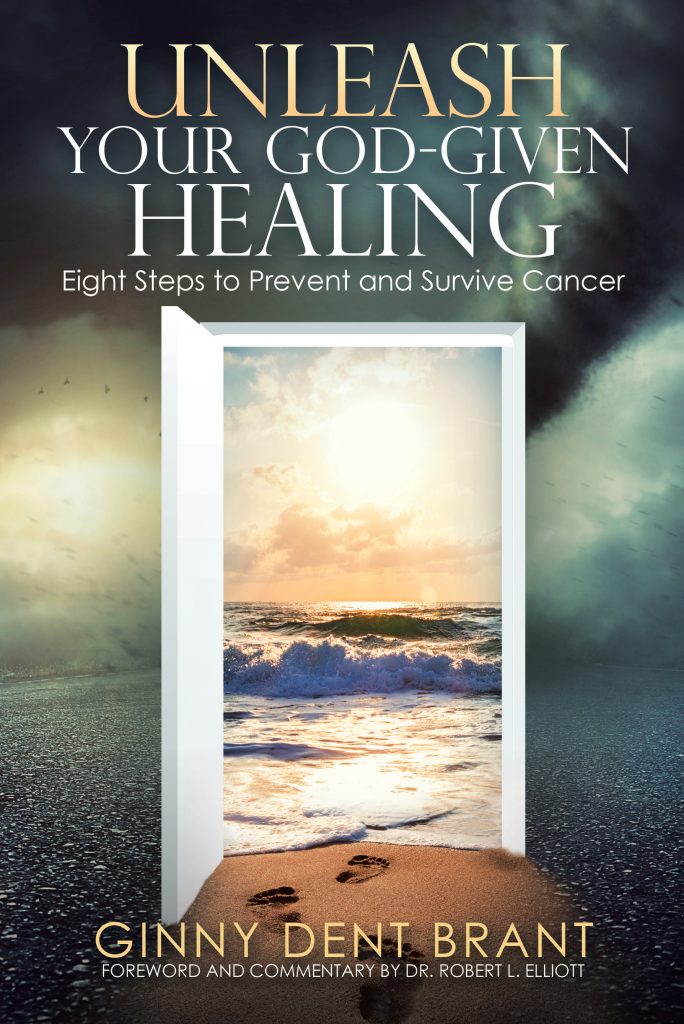 Ginny Dent Brant is a speaker and writer who grew up in the halls of power in Washington, DC. She has battled cancer, ministered around the world, and served on the front lines of American culture as a counselor, educator, wellness advocate, and adjunct professor. Brant’s award-winning book, Finding True Freedom: From the White House to the World, was endorsed by Chuck Colson and featured in many TV and media interviews. Unleash Your God-Given Healing: Eight Steps to Prevent and Survive Cancer was released in May 2020 after her journey with cancer and was recently awarded the First Place Golden Scrolls Award for Memoirs, a finalist in Serious Writers Book of the Decade, and Second Place in both Selah Awards for Memoirs and Director’s Choice Award for Nonfiction at the Blue Ridge Mountain Christian Writer’s Conference. It recently received the Christian Authors Network’s (CAN) Gold Award for Excellence in Marketing for reaching 62.5 million people with a message of cancer prevention and survival. It was written with commentary from an oncologist and was featured on CBN’s Healthy Living Show, Atlanta Live, and CTN’s Homekeepers along with over 75 media outlets. Learn more and cancer and wellness prevention blog and book information at www.ginnybrant.com. Ginny is on YouTube
Invite Ginny to speak at your church or event
Link to buy book at Unleash Your God-given Healing
Click to sign up to take Conquering Cancer Course
Ginny is a cancer coach. Make an appointment to meet with her:
***** This content is strictly the opinion of Ginny Brant and is for informational and educational purposes only. It is not intended to provide medical advice or to take the place of medical advice or treatment from a personal physician. All viewers of this content are advised to consult their doctors or qualified health professionals regarding specific health questions. Neither Ginny Brant nor the publisher of this content takes responsibility for possible health consequences of any person or persons reading or following the information in this educational content. All viewers of this content, especially those taking prescription or over-the-counter medications, should consult their physicians before beginning any nutrition, supplement, or lifestyle program. *****

You might also like