In the day in which we live, traveling has become more stressful over time. The days of hopping on an airplane and arriving just an hour before the flight are gone. We now live in a world of cancelled and delayed flights, long TSA lines, lost baggage, busy airports, and uncertainties. Welcome to the world of domestic and international travel. Because we love to travel, we’ve learned to navigate this crazy maze and lessen the stress that can ruin a trip.
Here’s just one example. After traveling 28 hours to get halfway around the world to Sydney, Australia a few years ago, we arrived only to find that our next flight was cancelled due to the Cairns airport and the entire area being declared a disaster zone after a hurricane. We were stranded. We’d missed a whole night’s sleep. When we went to retrieve our luggage and find a nearby hotel, my cell phone would not work, and we discovered our luggage was nowhere to be found. Talk about stress. We looked like two bedraggled house cats when we finally arrived at the Pier One Marriott Hotel in Sydney.
Instead of resting, we spent our first day trying to track down our luggage and salvaging our trip to Cairns to visit the Great Barrier Reef. Eugene, our concierge, finally told me, “Ginny, I can’t advise you to go to Cairns. It’s a disaster area. Most hotels are closed.”
Our trip’s number one goal was to go to the Great Barrier Reef. My heart was broken, but I knew he was right. He also told me not to leave Sydney until I had my luggage. “Even though the airlines say the luggage will follow you, the situation will get worse,” he warned. Then he told us that he’d called the airline about our luggage and he was told, “They have no idea where it is.” He then advised us to return to the airport and sit outside the baggage claim office and force them to locate our luggage. Tired and physically exhausted, we sat on that concrete floor nearly all day on the second day of our trip.
Finally, someone noticed us and tried to help us. She asked if we had AirTags. We did not know there was such a thing. She admitted that no one knew where our luggage was, but she was determined to help us. After sitting on that concrete floor for six hours, she joyfully gave us the good news. “Our luggage was in Melbourne, Australia, and they were sending it on the next plane to Sydney.”
We waited until it arrived. I’ve never been so relieved to have that luggage in my hands. We took a cab back to our hotel and met with Eugene. He helped us divert our trip to Melbourne and make all the arrangements. Melbourne turned out to be a wonderful place to visit. But welcome to the world of travel.
Here are 12 tips we’ve learned to reduce stress while travelling—most of them learned from the hard knocks of life.
- Get your affairs in order. When you leave to go across the world for weeks or even months, you want all of your financial and legal affairs in order. Make sure your wills are up to date, and your executor or family has access to your financials should you not be able to return as planned or should something happen. Before we leave, we always send updated info to a trusted individual in the event something delays or strands us, or God forbid, one of us is injured or passes. In all these years, nothing has happened, but it allows us to leave with less stress knowing that our affairs are in order.
- Carry passports, boarding passes, visas, etc. in a safe container around your neck or waist. I use an essentials and passport holder around my neck. It’s not very fashionable, but I don’t worry about fashion when I travel. I care about security and comfort. If you lose your passport, identification, boarding passes, or visas when traveling, it can be a nightmare. Years ago when on a mission trip to Romania, my roommate lost her passport. Our entire bus could not cross the border until she got it. She risked being left behind. Then both of us remembered we’d decided to go for a walk the afternoon before, and she left it under her pillow. We called the hotel, and the maid had found it. My roommate had to pay a courier to drive the passport to where we were. Never again. Our stress levels were off the charts.
When traveling, our passports and important information are always around my neck. When we are in a hotel, those important documents are in the hotel safe. It takes two of us to remind each other to get everything out of the safe before we check out. We also carry a paper copy of the picture page of our passports in our suitcases as well as a copy taken from our cell phones. I also recommend copying your insurance cards on both sides and credit card information on both sides, too.
- Book direct if possible and allow at least two hours between connecting flights. If you book your airfare early, you will have better access to direct flights. You want to book flights with the least amount of changes. I go to Google Flights or Expedia to see what all of the airlines are offering. I also compare pricing. Less stops equals less stress and less chance of missing a flight, lost baggage, and less cosmic radiation. When I book my airfare with Viking Cruises, I always pay for Air Plus. It gives me a say in the airline, direct flights, and connection times. I know in advance what I want, and Air Plus helps me to get it. Three of my Viking cruises have given us free airfare.
Some airlines will allow you to make reservations with 35-40 minute connection times. Don’t do that. When customs and immigration are involved, you’ll need 2 – 3 hours. Several years ago when flying through Philadelphia on our way back from London, the line to go through customs and immigration was so long, we risked not making our next flight. We finally cleared those two lines and then hit the reentry TSA line, which was about a mile long. We realized we would not make our flight.
As advised by an airline official, we exited the airport and entered through the TSA in the next terminal. We made our flight with five minutes to spare. That was a close call, and it was the last flight out to our airport that night with all nearby hotels full. Again, welcome to the world of travel. It’s better to be safe than sorry. I now allow three hours to clear customs and immigration and reentry through TSA. And I also avoid flights that come into the US through Philadelphia. They clearly don’t have this under control with too many international flights arriving with too few people helping the flow. Even with Global Entry and TSA Precheck, this airport was not able to handle the volume of passengers. Usually, Global Entry and TSA help, and I do recommend them if you travel overseas yearly or more.
- Consider buying AirTags. There is nothing worse than arriving at your destination and not having your luggage. It’s happened to me six times in the past 12 years. The most memorable time was went I was speaking in Alaska for a women’s conference. I’d packed my computer and essentials for speaking in my carry on luggage, and all my clothing including speaking attire in my check-in bag. Big mistake. We had a few days of sightseeing and hiking before the conference began, and I simply wore the same clothes for three days, But when it was time to speak, I had no appropriate clothes to wear.
The event planner had one thing in her wardrobe that fit me. It was a kuspuk—an Alaskan outfit with boots. I actually got ready to speak in this outfit when I heard the Delta man coming up the sidewalk with my luggage. Close call. We now have AirTags in each of our suitcases so we always know where our luggage is. And I pack an extra outfit and essentials in my carry on bag—especially my vitamins and any medications.

- Carry less clothing over more. Remember that you are the one who has to cart this luggage around over sidewalks, bumps, and streets. It’s best to pack clothing that meets your needs for a week and wear them multiple times by washing them. On our trips, we usually travel on our own for 7-14 days before we get on the cruise ship. As we travel from place to place, we wash every week. As soon as we get on the cruise ship, we go straight to the laundry to wash again. Then we wash before we leave the ship knowing we will do some days of travel on the other end. If you wash more, you can carry less. Avoid taking anything unnecessary and roll your clothes to reduce wrinkles and save space.
- Always join the airline program you’re flying on. We’re big Delta fans, but sometimes they don’t go where we do. So I have memberships in all the airlines we travel on. When returning from our Australia/New Zealand trip, I got an alert from the airline saying they had seats in business class for an upgrade. These seats usually sell for $3000 – $5000 each way. When I clicked on the offer, it said $300 each to upgrade. I could not believe my eyes. I clicked on the offer and paid for it immediately. We were exhausted and slept the whole way in business class. When I got home, my travel agent could not believe it. She told me not to expect that again. But there’s always hope. And I keep trying! My Gold Medallion Status on Delta sometimes bumps me up to a higher class of service.
- Take supplements that boost the immune system before flying. When you enter an airport, realize you are entering a germ factory that collects from all over the world. An airport is a likely place to pick up just the right germs to put a damper on your trip. Be prepared by taking immune-enhancing supplements to boost your immune system. For this recent trip, I took Oregon Grape Tincture by Herb Pharm and Rapid Immune Boost by Herb Pharm twice a day, two days before my trip and throughout the trip. And it worked.
- Leave for the airport earlier than expected. We know that we should be at the airport two hours earlier for domestic flights sand three hours early for international flights. But don’t make the mistake of not adding extra time for traffic on route to the airport. I’ve had three close calls on this one. When flying with my husband to visit my son and his family in Phoenix, road construction and an accident had us at a dead stop. We arrived with two minutes to spare. Never again. The next time we were flying from Atlanta, we allowed four hours to get to the airport, which takes two hours. An hour outside of the Atlanta airport, a truck on fire shut down both sides of the interstate and all back roads were jammed. The only thing that kept us sane was knowing we had two extra hours to get there. We arrived just in time, but totally stressed.
When flying, we’ve learned to be cautious, and it’s always better to get to the airport early than to be frantic trying to make a flight. You can always pull out your computer and get to work, or read a book. Now that we have lounge access through our Delta Reserve Card, we simply go to the lounge where it’s more comfortable. They have lots of good food and places to do work. We just upgraded to this card last year. And here’s why. For $650 a year, we get a buy-one, get-one free airline ticket to be used in the US, Mexico, and the Caribbean. Last year, we went to Aruba—both of us for $600. We get lounge access, free baggage, and here’s the main reason we upgraded—We now get $10,000 of travel insurance for two trips each year. This saves us money and is well worth the $650 paid.
Here’s my Amex referral link. Use it and we could both earn rewards if you are approved and get a card. https://americanexpress.com/en-us/referral/delta-skymiles-reserve-american-express-card?ref=VIRGIBNvoK&xl=cp01
If you don’t have lounge access, plan to eat breakfast or lunch once you get through TSA to pass the time. When flying, better early than late. It’s too expensive and unpredictable when you miss a flight—especially an international flight that only goes once a day.
When flying in other countries, make sure you know what their requirements are. In Argentina, one of their flights gave us a few hours notice, that it was leaving 30 minutes earlier than scheduled. Then on the way home, our flight was cancelled, and we were placed on a later flight to an airport 90 minutes away from the original airport. Some countries require that you be at the gate an hour before takeoff, or you lose your seat.
- Increase your water intake before and during flight. You want to be well-hydrated. This includes avoiding alcohol and limiting caffeine. Every time the stewardess or steward passes by, ask for more water. We also carry water on the plane after we go through TSA. Airports usually have water filter stations to fill up your steel containers.
- Use restrooms in the airport before and immediately after flying. This lessens your trips to the close-quarter airplane restrooms where you are more likely to be exposed to germs. On long overseas flights, you won’t be able to avoid the airplane restrooms, but I try to avoid them whenever possible.
- Move while on the plane. Once the seatbelt sign is turned off, use this opportunity to walk around the plane when no turbulence. Sitting for 5-10 hours straight is not good for your circulation or muscles. We always try to get an exit row seat on these long flights even if we have to pay. And sometimes we get bumped up to comfort class or first class.
- Rest the first day you arrive after an overnight flight. Neither one of us can sleep well on an overnight flight (unless we happen to get upgraded to business class). We let our hotel know ahead of time that we want an early check-in, and we are usually able to go straight to bed. After sleeping 3-4 hours, we get up, exercise, and eat a meal before turning in early that same night. We also ground our feet in sand, grass, or the beach as soon as we arrive at our hotel. Everyone on the plane gets exposed to some cosmic radiation, and this is one way to lower that exposure. This is one of the reasons why pilots and the airplane crew are limited to the hours they can be in the air.
These 12 tips can help you reduce the stress of traveling when airplanes are involved. When flights leave early in the morning, it never hurts to stay at an airport hotel to avoid traffic jams. Just remember, there’s nothing worse than missing a flight and the ramifications that follow. When you travel, almost anything can happen. So implement these tips and be prepared.
What unexpected things have happened when you were traveling?
View this message on YouTube:
Twelve Tips for Reducing Stress While Traveling
For Your Health,
Ginny
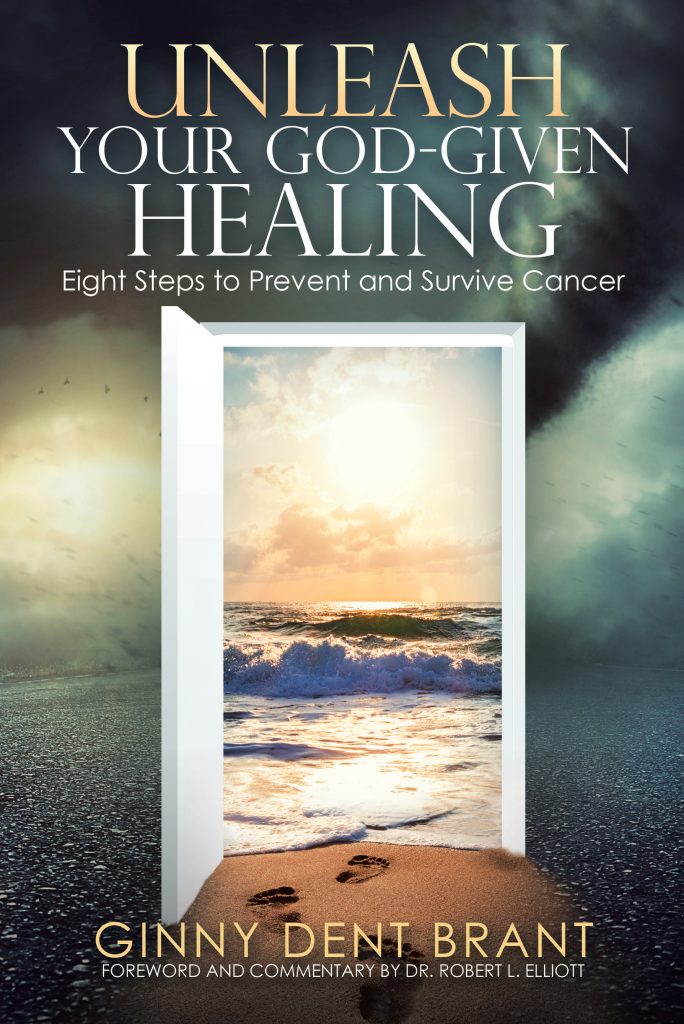 Ginny Dent Brant is a speaker and writer who grew up in the halls of power in Washington, DC. She has battled cancer, ministered around the world, and served on the front lines of American culture as a counselor, educator, wellness advocate, and adjunct professor. Brant’s award-winning book, Finding True Freedom: From the White House to the World, was endorsed by Chuck Colson and featured in many TV and media interviews. Unleash Your God-Given Healing: Eight Steps to Prevent and Survive Cancer was released in May 2020 after her journey with cancer and was recently awarded the First Place Golden Scrolls Award for Memoirs, a finalist in Serious Writers Book of the Decade, and Second Place in both Selah Awards for Memoirs and Director’s Choice Award for Nonfiction at the Blue Ridge Mountain Christian Writer’s Conference. It recently received the Christian Authors Network’s (CAN) Gold Award for Excellence in Marketing for reaching 62.5 million people with a message of cancer prevention and survival. It was written with commentary from an oncologist and was featured on CBN’s Healthy Living Show, Atlanta Live, and CTN’s Homekeepers along with over 75 media outlets. Learn more and cancer and wellness prevention blog and book information at www.ginnybrant.com.
Ginny is on YouTube
Invite Ginny to speak at your church or event
Link to buy book at Unleash Your God-given Healing
Click to sign up to take Conquering Cancer Course
Ginny is a cancer coach. Make an appointment to meet with her:
**** This content is strictly the opinion of Ginny Brant and is for informational and educational purposes only. It is not intended to provide medical advice or to take the place of medical advice or treatment from a personal physician. All viewers of this content are advised to consult their doctors or qualified health professionals regarding specific health questions. Neither Ginny Brant nor the publisher of this content takes responsibility for possible health consequences of any person or persons reading or following the information in this educational content. All viewers of this content, especially those taking prescription or over-the-counter medications, should consult their physicians before beginning any nutrition, supplement, or lifestyle program. ****

You might also like